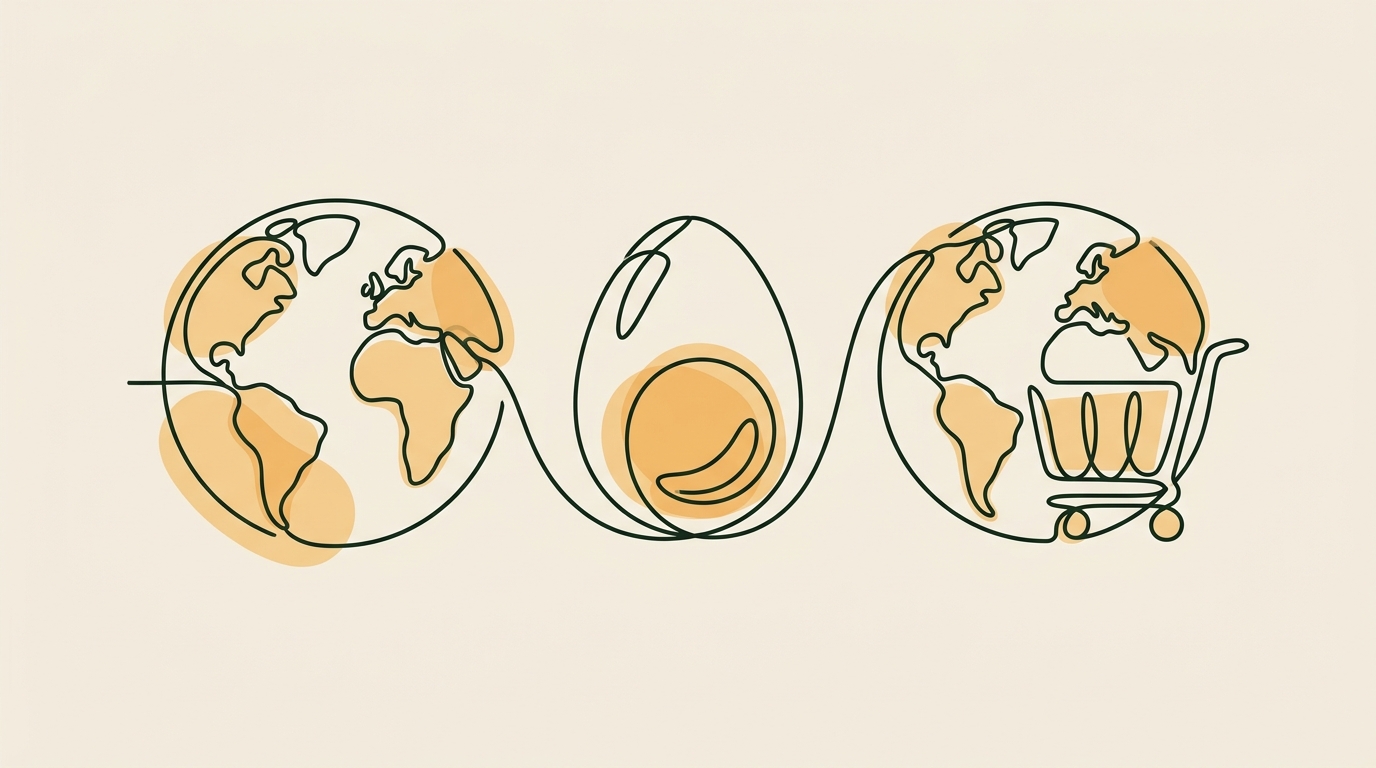
The Future of Global Egg Production and Kuwait's Industry
Global forecasts indicate that the egg industry is poised to grow by up to 20% by 2035, with nearly 90% of this growth concentrated in emerging markets, including Kuwait, according to a report by the World Egg Organization. This growth is primarily attributed to rising income levels and changing consumption patterns, particularly in Asia, Africa, and Latin America, which are driving production expansion.
While demand for eggs as a staple food is rising in emerging markets, developed markets are increasingly seeking value-added products, such as organic eggs or those enriched with omega-3 fatty acids. In terms of per capita consumption, figures show significant variation; consumption averages no more than 50 eggs per year in some parts of Africa, while it exceeds 300 eggs per year in countries such as Japan and Mexico. Emerging markets are experiencing the fastest growth rates in consumption, driven by rising incomes and improved living standards.
Leading international experts have confirmed that eggs will maintain their position as one of the most important sources of animal protein, with an annual growth rate of approximately 2% over the next decade. However, meeting this growing demand in developing regions will require the development of egg distribution systems and the adoption of innovative marketing strategies, along with a shift toward open-range production systems instead of traditional cages.
Rising global demand will necessitate significant financial investments in the feed sector and cage-free egg production, alongside the expansion of value-added products. Strategic investments will also focus on modernization and innovation, utilizing artificial intelligence, robotics, and precision agriculture technologies to improve efficiency and enhance food security. Innovation will span various fields, such as genetics, animal nutrition and health, and equipment.
In Kuwait, egg production is primarily concentrated in two companies that have strong capabilities in manufacturing high-quality feed, thanks to their advanced facilities. As for the rest of the egg-producing farms, they still rely on untrained labor and outdated machinery, which leads to higher production costs and increased wastage, as well as problems related to rodents and birds, adding at least 10% daily to the cost of feed.
The Proposed Solution Since the United Poultry Company was founded in 1974 with the aim of uniting poultry farmers under a single entity, it has become clear that the solution lies in bringing chicken and egg producers together under the umbrella of an integrated company that manufactures feed, operates a state-of-the-art poultry processing plant, and maintains a comprehensive center for egg collection and distribution. Instead of relying on small mills with a production capacity of 1–2 tons per hour, a large-scale plant with a capacity of 100 tons per hour can be established, with raw materials purchased in bulk to reduce costs. Poultry feed typically consists of corn, soybean meal, lime powder, calcium diphosphate, and concentrates containing a mixture of vitamins and minerals such as copper, manganese, calcium, and phosphorus. These concentrates are usually imported from international companies; however, a shift toward direct purchasing from specialized factories will reduce costs, while allowing for the adjustment of mixtures to suit the poultry’s productive life cycle to achieve optimal results. The feed mill should also be equipped with a comprehensive analysis center to determine the optimal feed mixtures based on the poultry’s age and productivity, as well as veterinarians to monitor production quality and ensure its safety.
A Call for the Future The adoption of a comprehensive national project to develop the feed and poultry industry in Kuwait has become an urgent necessity. Here, the role of the Ministry of Commerce and the Public Authority for Agriculture and Fisheries stands out in supporting the establishment of a specialized national company whose services are not limited to the poultry sector alone, but extend to include fish, livestock, and cattle feed, and even pet food. In this way, Kuwait can cement its position as a key player in the egg industry regionally and globally, while ensuring its food security and the sustainability of its agricultural resources.